Home EV Charger Placement and Safety in Los Angeles
EV Chargers · Published October 26, 2026 · Updated October 27, 2026
Planning a home EV charger in Los Angeles? Learn how to choose a safe garage location, plan cable reach, check electrical capacity, and prepare for permits.
Where should a home EV charger go?
Quick answer: Place a charger where the cable can reach your vehicle's charging port without stretching across a doorway, walkway, or vehicle path. Before buying equipment, have a licensed electrician check the home's electrical capacity, the cable route, equipment requirements, and local permit rules.
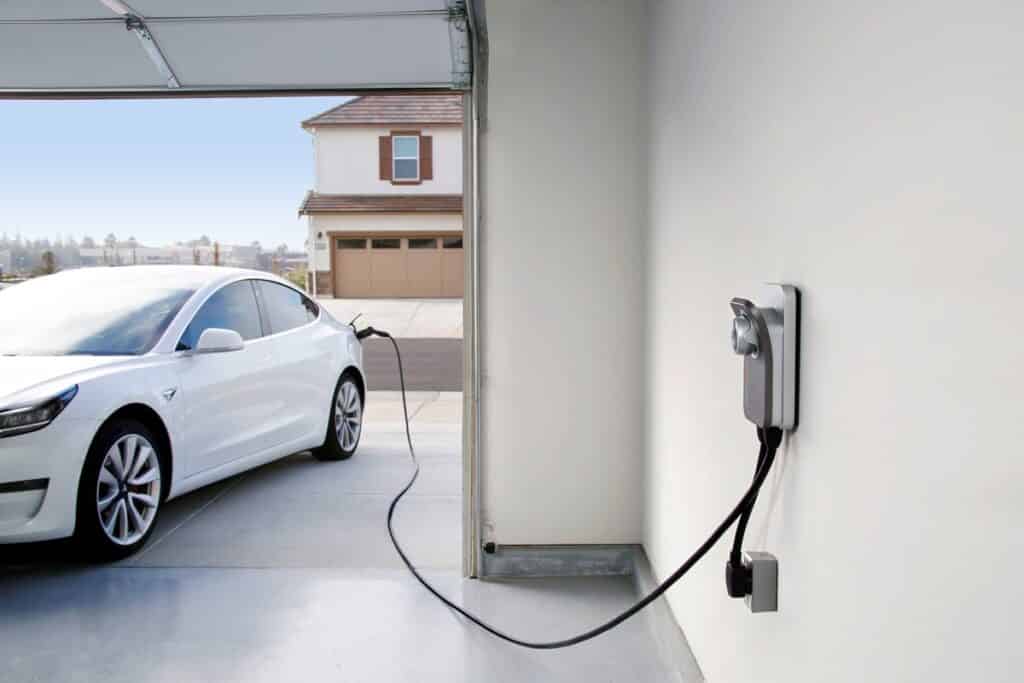
In a Los Angeles garage, a few minutes spent planning the parking position can prevent an awkward cable run later. The charger shown in the photo is an example of a residential garage setup; the best location for your home depends on your vehicle, garage, and electrical system.
Plan the parking position and cable reach
Park the vehicle in its normal position and note where the charging port sits. Measure a practical route from that point to a proposed wall location, allowing enough reach without leaving a loose loop where someone could trip or a car could roll over the cable.
Keep the cable clear of garage-door tracks, hinges, sharp edges, storage doors, and places where it could be pinched. Consider whether the location still works if you change vehicles or park a second car in the garage. Keep the charger and cable away from likely impact zones, and use the equipment's approved cable holder rather than hanging the connector by its cord.
If the charger is outside, choose equipment rated for its location and plan a protected route. The U.S. Department of Energy's Alternative Fuels Data Center notes that outdoor charging can be safe with outdoor-rated equipment. Do not use an extension cord as a substitute for a properly planned charging circuit.
Check the electrical system before choosing equipment
Many homeowners compare chargers by speed or price first. Start instead with an electrician's assessment of the panel, existing electrical loads, available capacity, proposed wiring route, and the vehicle's charging needs.
An empty breaker position does not by itself prove that the service can support a charger. A Level 2 unit may need a new circuit or other electrical work. In some homes, an electrician may determine that another suitable approach or equipment plan is more appropriate. There is no single breaker size or charger setting that fits every property.
Level 1 charging may meet some drivers' daily needs when a suitable dedicated branch circuit is available. Level 2 equipment can provide faster charging but generally requires additional planning and installation. Ask the electrician to explain the proposed circuit and equipment in writing before purchasing a charger.
Make everyday use safe and convenient
- Mount the equipment as directed by its manufacturer and keep its status indicators visible.
- Keep the connector and cable off the floor when not charging, using the supplied holder.
- Choose a route that avoids pedestrian paths and does not require the cord to cross a door opening.
- Protect wiring and the charger from vehicle impact, moisture exposure, and physical damage as appropriate for the location.
- Stop using equipment with damaged cords, cracked housings, unusual heat, or repeated faults; arrange an inspection rather than attempting an electrical repair yourself.
Never open the electrical panel or modify wiring to make a charger fit. A licensed electrician can assess the installation and explain when a permit or inspection is required.
Check permits and local requirements
Los Angeles County includes multiple cities and permitting authorities. Requirements for a home in the City of Los Angeles may differ from those in nearby cities. Confirm the property's jurisdiction and ask who will handle any required permit and inspection before work begins.
If you are considering a utility incentive or time-of-use rate, verify the current terms with your electric utility. Programs and eligibility can change, and an incentive should not be assumed in an installation budget.
Frequently asked questions
Can I plug an EV into an existing garage outlet?
Only after confirming that the outlet, circuit, protection, and equipment are suitable for the intended charging use. A nearby outlet is not automatically dedicated or appropriately rated. Ask a licensed electrician to evaluate it.
Does every home need a panel upgrade for Level 2 charging?
No. The answer depends on the home's electrical service, existing loads, charger settings, and proposed installation. A load assessment can show whether existing capacity is sufficient or what alternatives may be appropriate.
Is outdoor EV charging safe?
It can be, when the equipment is rated for outdoor use and installed according to manufacturer instructions and applicable electrical requirements. Have the installation assessed for its specific exposure and cable route.
Plan your home charging installation
SM Electric Services Corp provides EV charger and electrical services in Los Angeles County under California contractor license #964466. Call (818) 300-2003 or request an installation assessment. See our EV charger installation service, Tarzana and San Fernando Valley EV charging guide, and electrical panel upgrade guide.
Reference and image note
The U.S. Department of Energy's Alternative Fuels Data Center home charging guide covers Level 1 and Level 2 equipment, electrical capacity, safety-certified products, and the need to follow local requirements. The garage image illustrates a residential charging setup; actual placement and installation requirements vary by home and equipment.
Need electrical help in LA County? Call SM Electric Services Corp at (818) 300-2003 or request a free estimate.